
By: Aislinn Millette
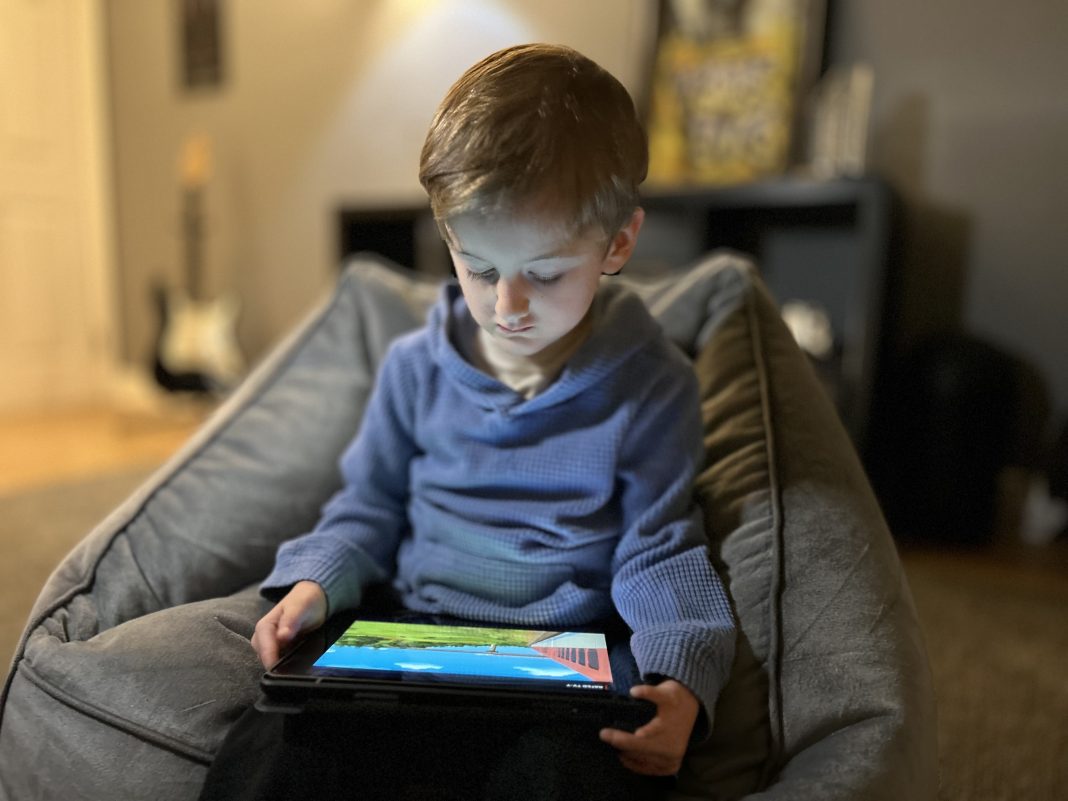
Imagine a child glued to a device in a bulky case. Their pudgy hands barely able to hold the weight of the tablet, and as they press the screen to click their next YouTube video, there’s a smacking sound from their tiny finger smooshing the screen. Laying on their stomach, legs swinging, headphones on, and wiping their nose with their hand. The iPad kid is the poster child for concerns for the next generation, not playing outside and vitally no attention span.
Well, in defense of that kid, picture a long day of work, getting home, just to plop on the couch and doom scroll for an hour. See the parallel?
In December 2025, Australia enacted the first world ban to block kids under 16 from accessing the country’s ten largest social media platforms, which includes YouTube. Some compare the law to an age limit for drinking, although some kids drink underage, societally it is recognized to have a collective age where usage is acceptable.
In today’s world, everything is digital, and with that comes the inevitability that a child’s world will also pivot to online mediums. This isn’t the result of lazy parenting, but rather a bigger issue we’re seeing in society, not just for our youth but for all, using devices as a distraction. This isn’t because parents don’t want to play with their kids, it’s because parents are tired too. Childcare isn’t cheap, so enter an iPad, providing endless entertainment.
Jane Shawcroft, an assistant professor at the School of Communication at Ohio State University, studies how technology fits into the role of a child’s life. She believes there is room for devices in a child’s life, if they are used in a meaningful way.
“Parents who use iPads with their kids a lot, a lot of times it’s because they don’t have adequate childcare, right? Like if I don’t have someone to watch my kid but like I’m working, like I have to work, or I have to like get the dishes done, or I have to clean the house. Parents have a lot on their plate, and they don’t always have enough support from our society,”
– Jane Shawcroft
Kids are left to have their tablets as babysitters. What they consume on their devices is up to them without supervision.
“We have this negative bias of like iPad kids are bad, but at the same time, it’s important to remember that like this is a choice being made because as a society we’ve decided not to support parents,” Shawcroft says. “We have this stigma, and I think we have this stigma for a reason, but I think it’s also important to recognize that a lot of times it’s not like a personal failing of a parent, it’s that parents are doing their best with the limited resources that they have.”
Concerns about children and devices are widespread. In a 2025 report from Dais, 81 per cent of Canadians support a phone ban in classrooms from kindergarten through grade 12. The concern about technology in children’s lives is pervasive, yet experts emphasize that the problem lies not with devices themselves, but with how they are used.
Children First Canada is a national charity that advocates for kids to live safely and successfully without barriers. Raissa Amany, Youth Program Manager at Children First Canada, says, “technology, when it’s used right, can be a powerful tool for learning … what we’ve done is we made sure that it provides young people that safe space to explore, to develop … ideas, and using it as a communication tool or like a bridge to learning.”
Educational tools are just that, tools. They need to be used with kids as an enhancement for learning, and kids should also be aware of the downsides of the dangers of being online, Amany says.
A 2023 study from the Journal of Applied Developmental Psychology surveyed 822 parents of kids four to eight. In the report, it found parents deemed nearly 40 per cent of the content their child interacts with educational.
“When we see kids on their iPads, a lot of times that doesn’t equate to play in our brains. And so, I think it just looks wrong in a way of we’re like oh, like this isn’t what children are supposed to be doing. Like kids are supposed to be like outside or running around or reading books, or playing or doing things, right? And I think (there are) some levels to that of you can play on an iPad, you know? And so it’s not that like wholesale iPads are a problem, but I think there is this kind of idea that like it doesn’t look quite like what a healthy childhood feels like,” Shawcroft says.
We want to make sure that educational technology in classrooms is being used in a way that’s enhancing learning, and not just something that can be done without technology, like a digital worksheet, Shawcroft says.
Big Bad Boo is a children’s animation studio based in British Columbia that works with the same childhood development psychologists from Sesame Workshop and PBS, as well as educators, to make shows entertaining for kids, but based in education. They have programs in Canada and Europe where they implement their shows in classrooms to keep kids engaged.
“So, kids learn a lot through television, and through play and fun, of course. TV and kids’ content is entertainment, and so they get wrapped into a story, wrapped into characters, they want to be the character, the characters are great role models for kids … they can learn from that character. If that character is going through something difficult that they identify with and then has a resolution at the end of it, it gives them hope that maybe if I’m going through that, I too can resolve my situation. So, kids’ programming is super powerful,” Shabnam Rezaei, the founder of Big Bad Boo studio, says.
The studio produces a show called Galapagos X, which is about four kids who time-travel, and in one episode, Doc Krok, the villain, has put glitter in the volcanoes. The kids travel back to see how this happened and convince Doc Krok not to add glitter because, in the future, they can see it is bad for the environment. They then give alternatives that are better for the environment, like flower petals or paper shreds, so kids have alternatives while also seeing that glitter ends up in their food and water systems.
“We use curriculum advisors who are experts in climate change and children’s media. So, we will sit down and write out, look at a whole bunch of curriculum cases for climate change, and then pick the ones that we think are fun and from there build the story. So, curriculum sits at the base of the show,” Rezaei says.
Kids mimic what they see on TV, but this also goes for what they see at home. If a parent has a dependency on their phone, a child could see that and be dependent on their device from that model, Shawcroft says.
“It used to be that, like you watched a TV, and so you could see your kid watching TV, and it was really easy to get engaged for that, versus with more like personal devices like iPads and cell phones. It’s a little bit harder to see how your kid is using that,”
– Jane Shawcroft
Big Bad Boo studios use curriculum advisors who are experts in climate change and children’s media. They will sit down and look at curriculum cases for climate change and then pick the ones that they think are fun, and from there build the story. So curriculum sits at the base of the show. It’s not something added later. It’s not something that’s an afterthought. It’s interlaced with the storyline, the characters, and it’s done with intention, Rezaei says.
Shows are tailored to keep the attention of kids while being educational. Looking at pacing and integrating comedy is how we ensure children stay engaged in storytelling, she says.
You have to respect kids intelligence and really meet them where they are. Sometimes that means including modern references, Rezaei says.
When Jackie Chernoff, a Gen-Xer and mother to a now 14-year-old daughter, Mila, and 11-year-old son, August, first became a mom, she had no idea what the future of media would look like. When she was preparing to be a mother a decade and a half ago, the iPad had just been released. Busy thinking about being a mom to a baby, she didn’t plan to set screen time limits. TV for her kids was a tool to keep them entertained while she could get things done.
When Mila was about five months old, I’d put her in her highchair with YouTube on my computer. I’d put Sesame Street on so that I could have a shower quickly. It was the only way to have a shower, Chernoff says.
The concept of putting on a show for your kids isn’t new when it comes to being a busy parent. For Chernoff, growing up in the ‘80s, her mom would put on the TV for her while she made dinner.
I had about three or four channels. So, there wasn’t a lot of variety. We had a lot more TV exposure when we got cable, watching TV news for about an hour a day. We subscribed to magazines and got the newspaper every day, and we listened to the radio in the car, Chernoff says.
As her kids aged, she watched their media habits change. For Mila, she didn’t see an interest in her and TV; she would just want to watch movies and re-create what she saw. She would put on costumes and just wanted to perform them all. For her son August, he had Treehouse shows playing background noise while he played, but as both her kids hit about five, they got iPads and their media habits switched to YouTube, because they got to flip through and pick what they wanted, she says.
A 2025 census from Common Sense Media found 40 per cent of kids under 2 have a tablet, and about one in four kids under eight have a cellphone. The report showed kids five to eight spend nearly three and a half hours on a device daily, with the primary usage being watching TV or videos.
While screens are often painted as the enemy of childhood, experts and parents alike suggest the picture is more nuanced. Technology is here to stay, and with guidance, it can complement play and creativity, rather than replace them. Parents juggling work, life, and childcare are making choices to implement these devices into their kids’ lives. It’s about ensuring, societally, the right tools on those devices are given to children.
For kids, the challenge isn’t to ban devices entirely, but to learn to navigate them thoughtfully, while still enjoying real-world connections. In a world where screens are ubiquitous, balance and understanding may be the most valuable lessons of all.