
By: Nina A. Kersnik
Created by Julia Sequeira, Managing Editor Online
Signa Butler
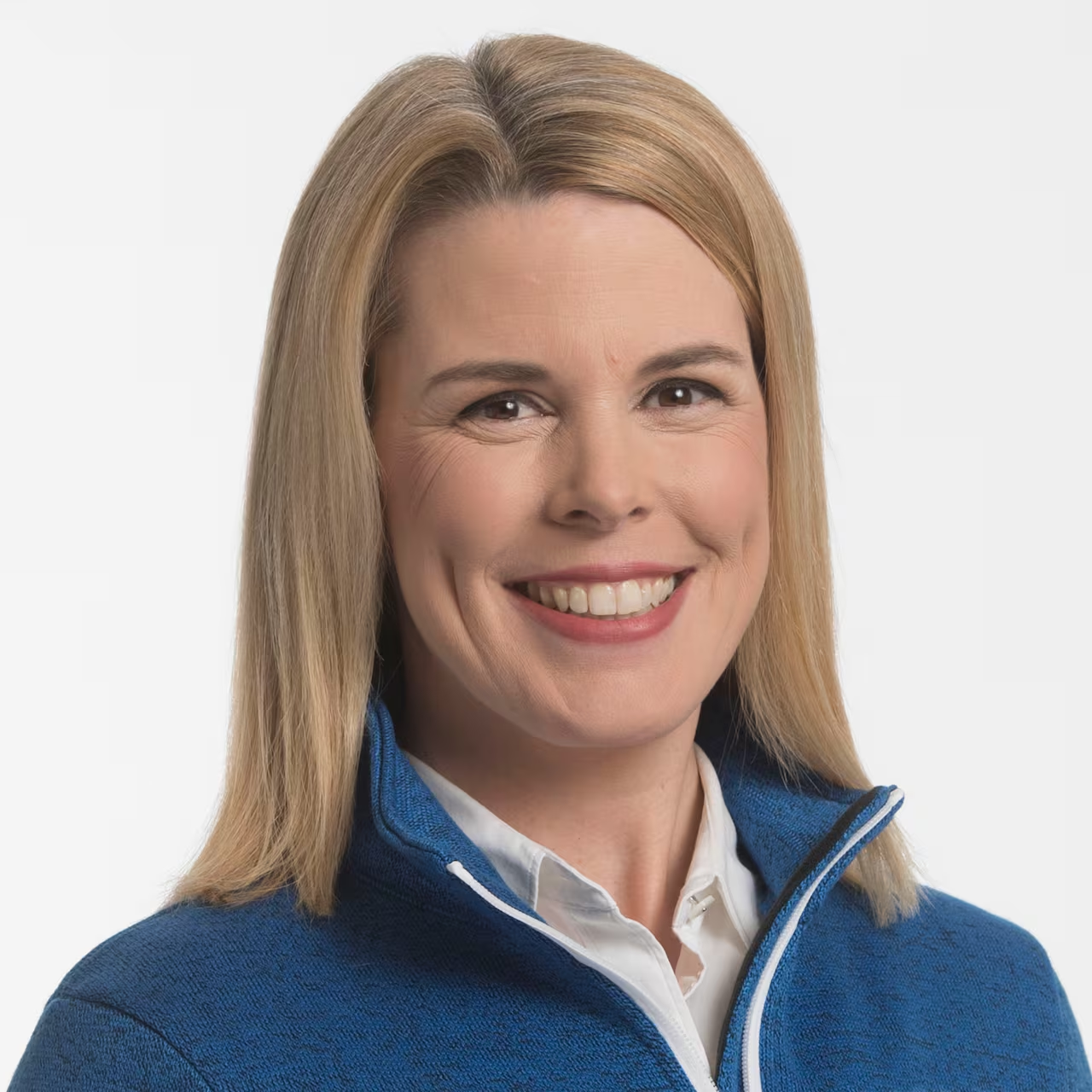
Signa Butler began her career with CBC as a Senior Writer in 2000, during the Sydney Olympic Games. She has worked in the industry for over two decades. Originally from Halifax, N.S., where she spent her time writing features on Olympic athletes.
Later, she left that role to become a play-by-play announcer, where she’s kept sports fansof all ages glued to their screens for the past 15 years. In that time, Butler has covered many major sports events such as the FIFA Women’s World Cup, several Olympic Games, the World Junior Hockey Championships and more.
Signa shared her ups and downs of her experience in the industry and the advice she would give others who aspire to go for it.
Q: What’s it like to cover an event as big as the Olympics?
The biggest thing is preparation. So, the preparation doesn’t start a week before, three weeks before. It starts, in the three years leading up to the Olympic Games, which happen every four years.
So, for me, it’s, I’m calling World Cup events or World Championship events in those years leading up to the Olympics. That’s part of my preparation.
The other part is getting to know the athletes and getting to know the coaches. Usually, it’s by phone or by video call these days, I don’t get to be on site too much anymore. But getting to know all the people that I’ll be covering, it just makes my coverage more authentic.
In the lead up to the games, which is probably, three weeks to two months out, like it’s research. So, biographical notes on all the athletes that you’ll be covering, not just the Canadians, but the internationals as well and what the storylines are.
I know it’s a sporting event and it just plays out as it does on paper, but you need to know what’s at stake and who’s the defending champion. What happens if the defending champion wins? What happens if the defending champion, collapses or has a huge loss? Who are the underdogs that you might need to watch out for? Who are the sort of dark horses in the races? Just identifying all of that, so you’re prepared for the moment and what may or may not happen.
Q: What skills are crucial to success when working in sports?
Ultimately, sports is like anything else. It doesn’t play out the way it is on paper. You look at it straightforward. It looks like team A is going to win. It looks like team A’s; stars are going to shine in that game. It might look like that on paper.
But in the reality is, you can prepare that way, but sports play out a completely different way. You don’t know if a game is going to go into triple overtime. You don’t know if the underdog is going to win. You don’t know if there’s going to be a three-peat. You don’t know until you get there. Knowing what all those potential scenarios are, is essential.
I think research is number one. You have to do your research. It can’t be done like the night before. It’s a lot of work to make sure you have all of your boxes ticked, if you will.
Storylines, like storytelling, like I think that that’s one thing that I think sets me apart from a lot of other play-by-play commentators. I don’t want to speak for everybody, but I feel like my play-by-play is a little bit different because I come from a journalistic background. I come from writing feature stories. I come from my curiosity is there, like what makes that athlete tick? Why does this athlete from Saskatoon, now one of the contenders in mogul skiing, what’s her backstory? She grew up in the prairies, how is she a mogul skier? What’s the story there? Okay, so asking those questions, so that it’s not just like, oh, so-and-so from Saskatoon. And the audience at home is saying, wait a second, a kid from Saskatoon is doing mogul skiing? What’s her story? Like, you have to think about what the viewer at home might be also thinking and answer those questions for them. I think having a natural curiosity around covering sports, whether you’re doing it as like a feature writing story, or if you’re doing live broadcasting, or you’re doing like highlights, can be very monotonous.
But if you have a piece of biographical information on someone that’s unique, that you found out yourself, that can make your coverage stand out from someone else’s.
Q: What advice would you give to aspiring journalists?
I would say definitely don’t be afraid to reach out to people.
I’ve done that in the past with multiple people, whether it’s been the head of our sports department or other commentators. People have been very generous with their time, as long as I give them a window.
People in the industry are very busy people. You need to make sure that you give them like a little bit of grace and leeway before you kind of want to touch base with them.
I think people are very open to that. We’ve all received advice from people over the years. So, we’re more than welcome to get that back.
David Amber
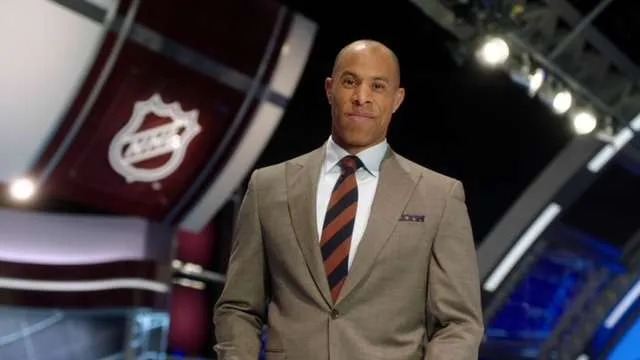
For almost three decades, David Amber has worked in sports journalism. He has covered events like the Stanley Cup Playoffs, the World Series, Tennis championships and more.
Amber has worked in the U.S. and Canada at companies like ESPN, SportsCentre and Hockey Night in Canada.
He shared how he got into the industry, the tedious parts of the job, and the extensiveness of how he curates notes for all the major leagues he covers. He also is honest about the challenges of managing work-life balance.
Q: Why did you decide to go into broadcast journalism?
Well, my dad was a journalist, so I kind of got exposed to it when I was younger. I was always a big sports fan and I’d been exposed a little bit to television, so I just thought that would be really cool.
I grew up wanting to be a professional athlete or a hockey player or something, but I realized, I didn’t know that was going to happen. I thought this would be a way to still have that itch of being able to be at the big sporting events and make a career out of it.
Q: What were your previous roles in the industry and how long were you at those companies?
When I graduated from Syracuse, I finished being a student and it took me a while to find a job. It took me about 11 months. I was driving around, trying to apply to all these entry-level positions.
I had a year’s visa to work in the States, so I applied in the States to these starter markets. Joplin, Missouri, Bangor, Maine, Jackson, Mississippi, North Platte, Nebraska, Redding, California, places you’ve probably never heard of. Entry-level. Rejection, rejection, rejection, rejection, I didn’t get anywhere.
I came back home, I drove around Ontario and finally I got my first chance on TV. It was in Sault Ste. Marie, which is about seven hours north of Toronto. I started out there. I went from Sault Ste. Marie as a reporter and it was in news and sports. Thankfully, the sports guy called in sick quite a bit. I got to fill in and do a lot of sports, which was nice. I did news and sports in Sault Ste. Marie, then I went to Calgary as a reporter for TSN. I then came to Toronto as a reporter and host, anchoring sports shows like SportsCenter for TSN.
And then I went down to the States. I lived in Connecticut for several years. I worked at ESPN, which is like TSN. It’s like America’s TSN. After that, I came back to Canada and I got a job at Hockey Night in Canada. And now here I am at the NHL and Sportsnet.
Q: To get into your current position, what were the challenges you’ve come across thus far?
As I mentioned a little bit, there’s a lot of rejection. It’s a very subjective field. One person might think you’re fantastic, you sound good, you look good, you have a good presence, you ask good questions and you’re smart. And another person, also an executive, is making this decision, so, it’s very subjective.
It took me a long time just to get a foot in the door. There were some other roadblocks, but I’ve been lucky. There’s a lot of opportunities that I’ve been given and I’ve been so thankful to make an impression where someone feels compelled to give me an opportunity. But there’s been a lot of opportunities that I pursued and didn’t get.
It’s an industry where you have to have thick skin. You have to be very patient. You have to be aggressive, but, you know, also be prepared to collaborate and work with people.
Show them how you’re a good teammate and hopefully those opportunities will come your way. When they do, you have to pounce on them. It’s not an easy, linear path. You just have to be as versatile as possible.
Q: What are your research gathering strategies?
I put together this little binder of notes, NHL notes, 25-26 and I have notes on every team. Calgary, Edmonton, on all 32 teams, I make notes. I make league notes about what’s going on, how many coaches have been fired, who are the new GMs, the expansion costs, the collective bargaining agreement. I do notes on the women’s league and I have very specific notes on every team. I know it’s excessive, because this isn’t something everyone does. But to me, I just want to know at the back of my mind. If we’re doing a game and I’m talking about Connor McDavid and I go, what did Connor McDavid do last year? Oh, here it is. He had 67 games, 26 goals, a few assists, as a rookie. The year before, he had 100 assists. He was the fifth player ever to have 100 assists. I can go on and on. I have this kind of running list of notes about each team and I keep writing in the binder as well during the year.
It’s kind of my little safety valve, if I ever need to just lean on it for information, little anecdotes could be helpful in the broadcast. I’m a bit of a nerd when it comes to the prep of everything.
Q: What do you like better, covering a game at the start of the playoffs or the final?
The final, because everything’s on the line. The beauty of covering something like the Stanley Cup final is all this build-up. At the end, you get to witness what’s been a lifetime of work for so many of these people. Not just the players, but the coaches, the manager and the fan base. You’re there, you’re in a city, these fans have been fans their whole lives and have never had their team succeed to win its championship.
I’m old and I haven’t been around to see a big Leafs Stanley Cup. You can only imagine, there’s people who live and breathe every minute of it. Then you’re at the final and that moment happens.
We’re in Florida, game six, Florida beats Edmonton, they win the Stanley Cup. The Cup’s on the ice, the fans are going nuts, the players are going nuts, their families are going nuts. It’s really cool to be in that environment.
I have nothing but respect for those players and everyone who’s made all those sacrifices to get someone to the NHL. It’s not just this kid has great skill, but will end up in the NHL.
It takes hours upon hours upon hours of practice. All the sacrifices, driving to the rinks, all those things, early mornings, late nights, all these great coaches and to see that all lined up with that childhood dream and realize that the player has the Cup over their head, it’s really cool.
We’re just flies on the wall, I’m not doing anything, I’m just there. But at the same time, I think it’s really neat to be there to witness, at the height of someone’s professional career, them living out their dreams.
Q: How do you deal with the pressure of your job?
When it does feel like a lot, at the end of the day, this is an escape.
People are saying for three hours I don’t want to think about my mortgage payment and the troubles I’m having with my kids or whatever.
It takes the pressure off a little bit. This should just be fun, light and entertaining. It’s not life and death. If you have a bad show or if things didn’t go perfectly, I try not to let it sit with me for too long.
Donnovan Bennett
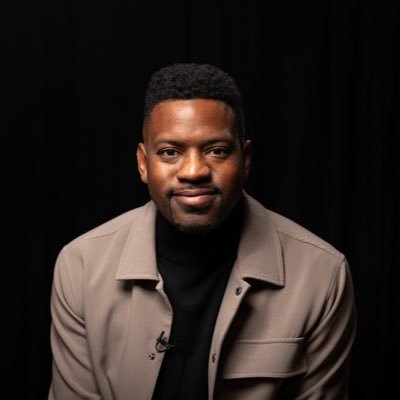
Donnovan Bennett starting his career at Sportsnet as a digital writer and has now ventured into a role broadcasting the 2026 Olympics for the CBC.
The University of Western Ontario alum holds a degree in Media Information Technoculture with a minor in Philosophy and has worked in sports journalism for 17 years.
From NBA All-Star games, to the Olympics, to the Grey Cup, Bennett has covered many major sports events extensively.
In November Donnovan took some time to discuss the challenges he faced within the industry, his day-to-day responsibilities and got philosophical and shared advice he might offer to newer sports journalists.
Q: Why did you decide to go into this field?
A: I loved sports, played sports for as long as I could. When I exhausted all those opportunities the next best thing for me was covering sports and being close to it.
Also broadcasting, I was a fan of different broadcasters as I consumed sports as a kid and so the only other thing I could think of doing professionally without playing would be broadcasting and storytelling.
Q: Of the events that you’ve done, which one did you enjoy covering the most?
The Olympics for sure.
I was an athlete, and as an athlete, the ultimate as an athlete is representing your country.
Sports broadcasting is obviously different. But the ultimate in terms of competition and honor is to be able to represent your country as a broadcaster. To be able to broadcast to Canadians about Canadians representing our country in sport is pretty cool.
And when you get to work with a bunch of broadcasters from different parts of the country, different networks and so, you all come together for this one common goal for three weeks and no one is competing against each other you’re all kind of collaborating.
So, it’s like, you know, a sports broadcast version of summer camp, which I find really cool.
Q: What have you done with the CBC?
I did the Summer Olympics for them in 2024, I’m actually going to do the Vanier Cup for them this weekend (Nov. 18), so I have a long-standing on and off relationship with CBC, I’ve popped in on different shows and what not, you know there’s been many years where like I did my taxes after Rogers and Sportsnet and the next biggest thing is CBC.
But in terms of the Winter Olympic coverage, I think that was announced with like one hundred days out. But I’ve known for a while thinking about it and getting research for a while.
Q: What are the biggest challenges for you as a writer?
The market is so oversaturated. There are so many different outlets and independent voices and social media platforms that whenever a story breaks, immediately there is a tone of analysis conjecture, thought on it and so, you know, it mainly just a lot of it just cannibalizes stuff and none of it actually gets defined, big enough audience or cut through.
And I think the other challenge for me, you know personally is just fighting for the diversity in the stories that are told, you know everyone has to pitch a story and has to convince people that that story makes sense or is worth telling, or worth investing in, worth paying for et cetera, et cetera.
But a lot of the – almost exclusively – the decision makers are old, white men who have worked in the industry for a long time. It’s an uphill battle sometimes in terms of doing stories on some unique different sports or unique and different issues and then people are motivated by what they are incentivized to do and so even if people have unique, interesting ideas or thoughts, if they know that these are the stories that pay, or these are the stories that get green lit or these are the stories that get supported and lots of time on the homepage, lots of promotion on social media then people are just going to gravitate to telling those stories and even with some unique voices you get a recycling of that same type of storytelling.
So, I think that’s the other challenge in the industry right now.
Q: What advice would you give to like other sports journalists?
Write as much as you can, no matter what type of role you’re in, whether it be a writer or a host, there is going to be an aspect of writing. So, the more comfortable you get translating your thoughts your mind to paper, whether people would follow it, that’s an invaluable skill.
Write as much as possible, consume as much as possible, read, watch, listen [to] all different mediums, what you like, what you don’t like, what would you do differently. You know, people often wait until they’re in their role to think like that and to do research on the subject matter, you gotta do that before you’re in the role, so that when you are in the role you cannot just survive but thrive.
And then I think the last thing is to just lean into your difference, whatever that is. It could be your age, it could be your gender, it could be your race, it could be the fact that you’re really good at math, or you have great fashion sense.
Whatever that is, lean into it, you know that is your superpower, some people try to dim that and conform and you’re not doing yourself any service doing that.
Things that make me unique and interesting or provide a different viewpoint now at the age of 42 are entirely different than when I got into the industry at the age of 24 or whatever it was.
I would say, make your mess and not shy away from some of the things than make you an outside of the box candidate.