
The negative Western gentrification of Asian icons
By: Julia Ilano
In today’s day and age, it’s fair to assume that much of our media and pop culture is being shaped by East Asian pop culture. Netflix’s KPop Demon Hunters’ soundtrack dominated the Billboard 200 for 18 consecutive weeks and has had multiple theatrical releases as of November 2025. Japanese media, such as Akira, are constantly paid homage in North American cartoons with the iconic motorcycle slide.
The love and appreciation these phenomena receive nowadays, however, were never sudden. It was a slow build up for many fans to see the culture they adored rise into the spotlight. Back in the early 2000s, these aspects weren’t discovered through social media trends or accolades that these pieces of media would receive from Western organizations.
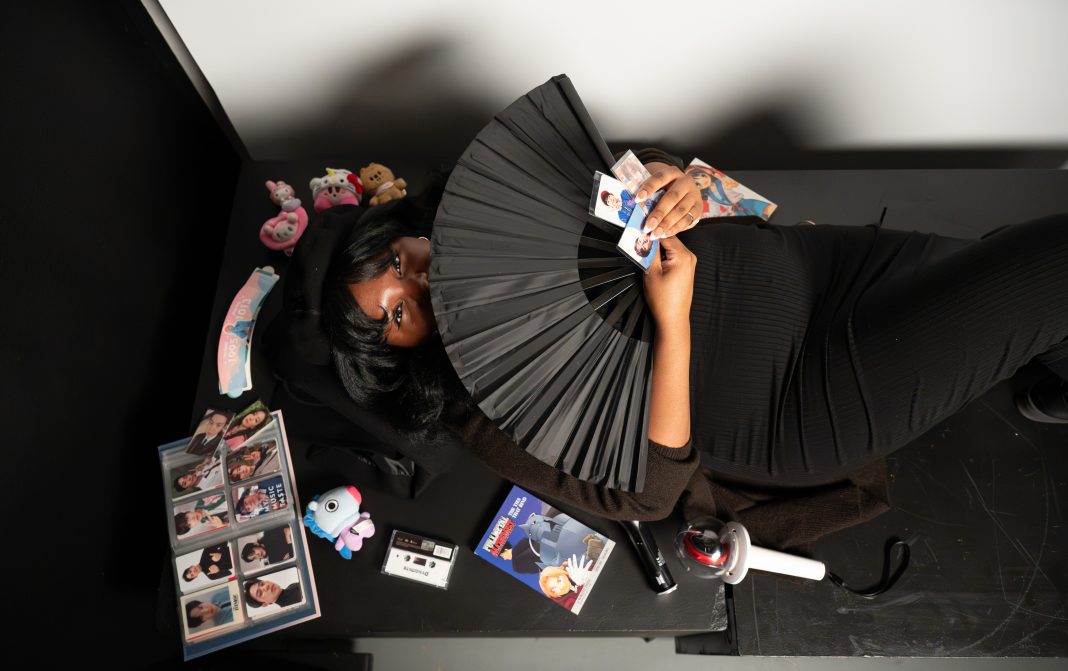
For many fans, such as Grace Omari-Mensah, it was a random discovery that shaped her media consumption. She was first introduced to both K-pop and anime at the age of 14. One of her friends had suddenly begun playing a K-pop group, Super Junior, out loud and dancing along to it during their lunch break.
“I went to science class later that day and I just had my iPod and I was listening to that song over and over again. I was enjoying it so much and I ended up falling down a little rabbit hole,” she says.
“I didn’t know there was a whole world over there, I thought we were the only ones […] just because people didn’t really care about East Asian pop culture,”
– Grace Omari-Mensah
Omari-Mensah says she wasn’t surprised to see the appearance of Korean pop culture, or Hallyu culture, within today’s media. She says, as a fan, it felt like the ultimate goal was to bring it over to “our side of the world” and westernize it.
However, the celebration of this media is a double-edged sword; as much as it uplifts and brings attention to marginalized groups, it also introduces the idea of contorting it so far that it’s palatable for overseas countries.
FROM IDOL TO IDEAL
Min Joo Lee, an assistant professor in the Department of Asian Studies at Occidental College in Los Angeles, Calif., focuses much of her research on contemporary Korean culture in relation to pop culture, gender and sexuality.

She says there is truth in the commodification of “Korean-ness” as a brand, one that shows the world what Korea sees as its national pride in terms of its culture. Some part of this idea, however, lies in the ties Korea has with North America.
“There’s validity attached to Western approval, but it isn’t about the West being superior,” she says. “More so like, validating through the foreignness of them as opposed to their hierarchical status.”
Korea has drifted to portraying itself as a more negative lens. Lee says an article she read had prompted her realization on the topic. In the beginning, Korea was focused on portraying a good image of itself that depicted the positive aspects of Korean society. However, nowadays, media such as Parasite or Squid Game portray more of the negatives.
“The Korean government doesn’t seem to particularly care and actually promotes those kinds of images, because they realize the negative image sells, it’s popular and it’s another way for Korea to garner money,” she says.
One instance of Hallyu culture bleeding into the international diaspora lies in the introduction of the Hongdae Guy meme on social media. First gaining attention from influencer Sean Solo, the meme aims to uplift the hypersexual behaviours of Korean men who try and pursue foreigners.
However, that wasn’t the main takeaway for many people. In the comments of any of his TikTok or Instagram posts, the main observation was the Korean accent Solo would employ when imitating the Hongdae Guy persona. Lee says her hypothesis about these reactions is because of the overall perception of Asian men by foreigners.
“[It] could be because they are thinking these kinds of sexual approaches by Asian men aren’t that serious or considered as predatory because they aren’t dangerous,” Lee says.
“And that goes into the orientalist stereotype that America, or some parts of the West, have regarding Asian men’s masculinity and sexuality, being too effeminate and not being dangerous because they’re weak,” she says.
Orientalism is a critical concept first put forward by Palestinian-American academic, Edward Said, in a book published in the 18th century. His book breaks down how the Western world’s depiction of the Eastern world is seen as inferior.
Orientalism, in relation to Hallyu culture, is a common occurrence among many international folks. Lee says that within Western media, it is common to see Asian masculinity stereotyped through a racist lens; effeminate, delicate men who are “weak knockoffs” of Western masculinity.
Deanna Sabatino, a fan of K-pop for two years, echoes many of these observations with her interactions within the online K-pop fandom. She says it’s common for many fans to infantilize these idols, often to a point where it means excusing any actions their idols may do.
“[The fans] still can’t escape stereotyping Asian men, like babying them in some way, or if they do something wrong, they blame it on the company,”
– Deanna Sabatino
Sabatino brings up BTS’ Park Jimin, an idol known to embrace both a feminine and masculine gender identity within his work. Despite this androgynous gendered expression, many people have interpreted this as a way to assign whatever they feel is appropriate to Park.
“Especially with K-pop idols, they assign roles to them, especially if they look more feminine. For example, ‘did you know Jimin’s pronouns are she/her?’, but like, when did he say that? It was more like stereotyping and putting him in a category,” she says.
Hallyu culture isn’t the only victim of Orientalism. Many elements of Japanese pop culture are often misinterpreted and disparaged based on how the attitudes of fans intersect with societal and cultural norms.
CELEBRATION, OR CARICATURE?
Maiko Kodaka, assistant professor at Sophia University in Tokyo, Japan, specializes in media studies with visual/popular culture in relation to the anthropology of Japan. She says COVID-19 contributed to the rise in popularity of Oshikatsu and Otaku culture.
Oshikatsu refers to people who go out of their way to spend money on their favorite idols. Meanwhile, Otaku is a term for obsessive fans of anime.
The term otaku, however, didn’t always have a positive connotation behind it. She says the term otaku used to be a discriminatory term, with the visualization often associated referring to an “ugly middle-aged man locked in a small, messy room and is socially withdrawn.”
“The interpretation of the word has dramatically changed because of Western audiences. I teach a lot of international students and they say to me, especially after COVID, it became so normalized to watch anime,” Kodaka says.
She says it’s common for Japanese people to be fetishized because of international fans’ perceptions of anime, even having her own experiences while studying abroad.
“I met this British guy, he was like, ‘I’m so Japanese. I’ve never been to Japan, but I’m so Japanese and I have to get married to a Japanese woman.’ And I was like, why don’t you start with studying the Japanese language?”
– Maiko Kodaka
These perceptions of wanting Japanese people simply because of how Oshikatsu culture has influenced them carry over to how they perceive people and their bodies. For instance, VTubers are a common instance of how women are treated online.
VTubers are virtual idols with a different persona and appearance from the person portraying the idol. They often livestream themselves on YouTube or Twitch. It was a phenomena that exploded during COVID-19, with Kodaka even referencing a popular Japanese broadcast network, NHK, televising a segment on Oshikatsu culture and a popular VTuber company, HoloLive.
With many of the idols being predominantly women, however, it means many VTubers experienced degradation due to not fitting a certain mold for how women are expected to be.
“Men can be really toxic. And sometimes, they make very abusive comments. Especially, right now, I’m looking at this technology-facilitated sexual violence, I think because of anonymity, I think gender inequality get really amplified in these digital space,” she says.
For instance, Kodaka says that in sites such as PornHub and OnlyFans, Japanese “always ranks weirdly.” She references the online male escort service specifically, which began in 2018 and has been growing alongside pornography targeted towards women.
These men often purposely portray an image of themselves that is palatable to their audience; clean-shaven, tall, muscular bodies and a term that literally translates to, “socially vulnerable men.” Kodaka references manospheres, which is an umbrella term for online communities that are anti-feminist and promote their idea of masculinity.
“It’s very much similar to incel manospheres. These people are suffering these days and they are marginalized from gender discussion, but they’re also marginalized in the framework of hegemonic masculinity,”
-Maiko Kodaka
Omari-Mensah says this is something she noticed when consuming otaku culture. She says many forms of Japanese media, such as manga and anime, portray overly sexualized tropes that are often normalized.
She even points out certain plot lines in these forms of media being predominantly sexual. Omari-Mensah points out a character from the series One Punch Man as her main example, who constantly wears a shirt which says ‘OPPAI’, which means big boobs in Japanese slang.
“He fully wears that shirt all the time. I never really thought about it, but it made me kind of confused, but just like, am I okay with this or do I not want to see that?” she says.
It doesn’t mean there have only been negatives that came from these forms of media exploding in popularity. After all, this double-edged sword still has another side to consider.
GLOBAL FANS, GLOBAL BRIDGES
Despite the commodification that Hallyu culture has experienced, Lee says there were still positives that came out of it. For instance, she references the make-up brand TIRTIR, and how it adapted to include a global audience.
A Black beauty YouTuber, Darcei Giles, had posted a review on TIRTIR’s foundations in 2024. Giles had praised the foundation for it’s coverage and formula, but noted how it came in a limited amount of shades.
“This beauty YouTuber was checking it out and felt like it was not enough for the global consumer base. So, she commented, and they returned by saying oh, we’re going to produce massive amounts of darker shades,” Lee says.
“That’s one aspect of commodification that I see was positive, like the other people who are consuming it don’t necessarily see the Korean aspect, the historical or cultural context of it. It just focuses on, oh, this company has good PR and good customer reaction,” she says.
Besides the global benefits, there have been more local positives. Specifically, within the fan community in Toronto.
Aris Welchner, known online as astroxnot, is a well-known fan artist and merchandise designer in the Toronto K-pop fandom community. The OCADU graduate has been involved since 2017, harbouring their own experiences that have shaped the way they interact with the community.
Even with how small the K-pop artist community is in Toronto, Welchner says they met many friends from participating in events. They mention meeting their first “real-life” K-pop friends during one of the first conventions they sold merchandise at.
“I tend to find, as someone in the creative corner of it, there is this nice kind of line with the things we make for ourselves and our own ideas versus the things that have to do with them as idols,” they say.
“It’s more like a little playground to, if I want to draw Jisung being all cutie patootie, then no one can stop me!” they say.
Jisung, aka Han Jisung, is a K-pop idol part of the group Stray Kids whom Welchner tends to gravitate towards.
Other fans, such as Sabatino, had more negative experiences within the online fanbase. Despite that, she believes it’s important to remember to respect how you consume different cultures.
“I’m consuming another nation’s culture, [and] I don’t want to be insensitive about that. But also, in my mind, this is music that anyone can enjoy,” she says.
Despite the orientalist ideals, misogynistic tendencies, or the over-commodification of these cultures, it doesn’t change the fact that the sudden popularity of these media provided a way for people to learn about different cultures that used to be dismissed.
However, it’s important to understand how and why people need to be respectful when engaging with marginalized groups that they aren’t a part of.
“As long as you’re aware of where you stand and have that respect, I think it’s completely fine,” Sabatino says.