
By Shaina List
JoyBelle Phelan had never seen herself as a writer.
She’d always been creative, but that creativity was squashed by an abusive and dysfunctional childhood. She’d always been smart, but as an adopted child, she never felt worthy unless she did something to earn it.
But when the opportunity came up to take a 12-week writing course, Phelan was excited. Because at that point — more than four years into her incarceration in Colorado state prison — she really was trying to do things differently.
“I needed… to make sure I didn’t come back to prison and that I really turned my life around,” Phelan says. “Writing was absolutely the path by which I was figuring out all the stuff I needed to figure out.”
And there was a lot for her to process.
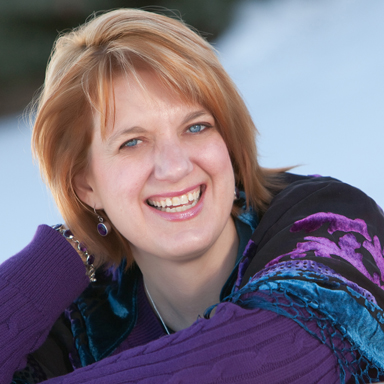
At 38 years old, Phelan had found herself in a jail cell after being arrested at her home on felony theft charges. She was trying to buy love from her friends and abusive husband, but she needed money for that, and finances were tight.
The judge told Phelan he was sentencing her to eight years.
Ultimately, she would serve over 2,000 days in prison.
Some of those days were filled with terror and humiliation. Officers harassed her. Her laundry was returned wet. She had to memorize a number that was assigned to replace her name.
But something else happened while Phelan was in prison. She was offered the chance to write. First, as part of that 12-week course, and later, for a newspaper produced by and for incarcerated people like her.
In July 2020, she became the first woman in her facility to be published in that paper.
When the flyers for The Inside Report first appeared in La Vista Correctional Center, Phelan recalls a spokesperson coming to talk about the history of journalism in prisons — which, in the United States, she was told, dates all the way back to the 1890s.
“That was really the first time I’d heard about it,” Phelan says. “And so [I was] just becoming aware that there are stories to tell everywhere… there’s a whole wealth of storytelling that will never see the light of day, because these people are incarcerated.”
PRISON JOURNALISM TODAY
The Inside Report shut down in 2023. But across the U.S. and Canada, myriad prison journalism initiatives are giving agency and voice to otherwise invisible communities.
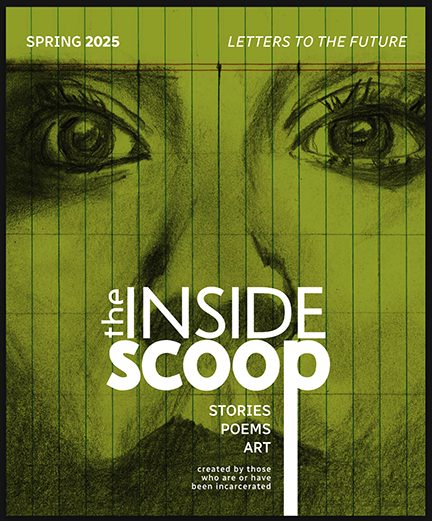
One Canadian example is the quarterly newspaper Cell Count, made by and for prisoners with support from the harm-reduction nonprofit PASAN. Another is The Inside Scoop, published by the John Howard Society of Manitoba (JHSM) and written by incarcerated contributors.
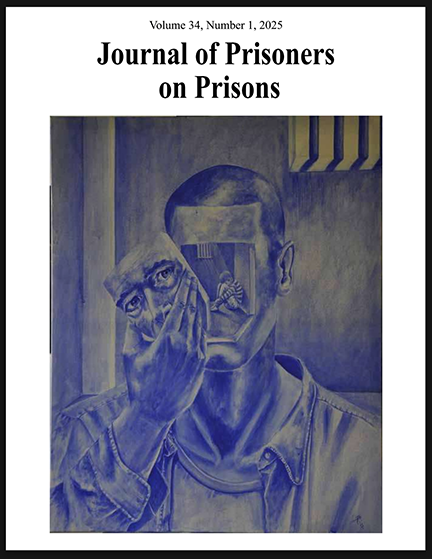
There’s also the Journal of Prisoners on Prisons, the only academic journal in the world that collaborates directly with prisoners to produce its research.
In the U.S., the nonprofit Prison Journalism Project not only publishes incarcerated writers but teaches journalism behind bars. Its co-founder, Shaheen Pasha, says she created the project so incarcerated people can have a say in how their stories are told.
“Our writers tell us that the ability to report their experiences from prison has already broken down some of the walls that were built around them,” Pasha wrote in an article for Nieman Reports.
“And the realization that they are a part of a budding community of prison journalists has given them an identity that extends far beyond the crimes that have come to define them.”
UNTOLD STORIES
The walls Pasha spoke about take many forms for prisoners. For one thing, most stories about them are written by people who can’t see them up close.
Reporter Geena Mortfield called attention to these barriers in an article for Canada Press Freedom Project. Although sensationalistic stories may make it to the press, she wrote, little is transmitted about prisoners’ everyday experiences.
But there are many hoops to jump through for journalists who want to tell deeper stories.
In Canada, they must follow the Correctional Service of Canada’s (CSC) Commissioner’s Directives. These require, for example, getting permission to enter a facility or speak to an incarcerated person. Physical dividers may also be required during interviews, at the institution’s discretion, according to the directives.
Mortfield says the approval-seeking process often results in significant delays or reporters being denied interviews altogether.
There are also time limits and costs for prisoners who want to call journalists. And there’s the chance they could be punished for daring to speak. The possibility of having one’s phone privileges revoked is “especially grave,” Mortfield wrote in the article, since the phone may be a prisoner’s only link to the outside world.
Chanelle Lajoie, who works with contributors to JHSM’s Inside Scoop, says this fear of punishment is why some people choose not to share, even when they have the chance.
“Silence is a form of protection for a lot of people who are experiencing incarceration,” they said. “You just don’t know where your story is going to go when it’s shared, or what the motive is for someone asking.”
But in the absence of diverse, nuanced stories told by those with lived experience, portrayals of incarcerated people are often one-dimensional and stigmatizing. This was flagged by the Mental Health Commission of Canada in a 2020 report, which recommended addressing negative media representation as a way to improve prisoners’ mental health.
Kevin Walby, co-editor of the Journal of Prisoners on Prisons, also emphasized the pervasiveness of stereotypes about this population.
“Most people don’t think imprisoned people are creative, are artists, are writers, are as talented as them,” he says.
“But the fact is, people behind bars are every bit as talented as anybody else. And they’re just as concerned as citizens.”
INSIDE THE CANADIAN CARCERAL SYSTEM
The CSC, which incarcerates about 15,000 people across 43 institutions, says it often facilitates media interviews with its inmates.
It also maintains an “access list” with phone numbers prisoners can use, including numbers for “legal offices, volunteer organizations, government entities, and the Office of the Correctional Investigator [OCI],” it said in a written statement to Convergence.
But the OCI itself has been sharply critical of the CSC, citing human rights violations and an overall lack of transparency.
In OCI’s 2023-24 annual report, Correctional Investigator Ivan Zinger said his office’s attempts to obtain vital information from the CSC were “futile.”
The 2024-25 report was released on Oct. 30, after OCI conducted more than 400 interviews with stakeholders. Among other criticisms, it accused the CSC of using its accreditation as a “shield” to deflect legitimate complaints from prisoners.
Walby, who is also director of the Centre for Access to Information and Justice at the University of Winnipeg, says his own research using Access to Information requests highlighted the importance of hearing from prisoners firsthand.
In the Prison Pandemic Papers, he and his colleagues obtained previously hidden details on how correctional institutions were responding to the COVID-19 crisis. He says the fear was “palpable” in the written grievances of prisoners they obtained, which revealed how people were begging for more space, more PPE, anything to keep them safer.
“And for the most part, the prisons didn’t do anything… because they said it would be a security threat,” Walby says.
THE PENAL PRESS: A HISTORY
Yet not that long ago, prisoners’ voices in Canada were celebrated.
What became known as the penal press first emerged in the 1950s, during a period of public interest in prison reform. The press was created as a formalized, government-funded outlet for incarcerated people to share their writing with the free world.
During the press’s golden era in the 1950s and ‘60s, incarcerated people formed fully-fledged newsrooms. They didn’t just write material. They were editors and designers. They even ran their own printing presses, which were housed within institutions.
Today, Okanagan College professor Melissa Munn manages a digital archive of penal press writing. She says one of the biggest differences from today’s prison journalism is the level of support and influence writers once had.
But in the mid-1960s, sweeping changes came to prisons. Mass redistributions of prisoners led to a decline in the production of prison newspapers. Political sentiment also shifted over time, and with the proliferation of the “crackdown on crime” ethos of the ‘80s, the institutional penal press all but disappeared, Munn says.
Munn’s former professor, Robert Gaucher, started the penal press archive after amassing a personal collection of more than 1,300 issues.
Munn took over and digitized the archive when Gaucher retired. She says what strikes her about the work is just how “ahead of its time” it is.
In the ‘50s, writers were advocating for specialized drug courts, and in the ‘60s and ‘70s, they were calling to reduce plastic, she says.
“That’s way before we started doing anything like that in the mainstream. So I like to think that what the prisoners have done exceptionally well over the years is plant the seeds for discussion,” Munn says.
What remains today are mostly grassroots publications, which lack institutional funding or support.
But we’ve also entered an era where prisoners are more afraid of being punished for their writing, says Munn. “And that’s a huge reversal from where the writers in the press were originally esteemed and revered.”
NAVIGATING CENSORSHIP
That may be why Phelan recalled many stories in The Inside Report as “shiny.”
She didn’t blame the writers, because she knew she was only able to read what had been approved by the Department of Corrections.
She herself wrote a story during the COVID-19 pandemic, using copies of The Denver Post to track how many people were dying. But she says the piece was never even submitted because the paper’s advisor told her it would never get past reviewers.
Editors of prison publications must find this balance too — retaining as much of a story’s authenticity as possible, but not so much authenticity that it won’t be allowed into an institution.
The outgoing editor of Cell Count, Sena Hussain, says this is a skill she had to develop over her almost nine years at the paper. She always had to anticipate where the lines might be, she says, because what was considered acceptable was always a moving target.
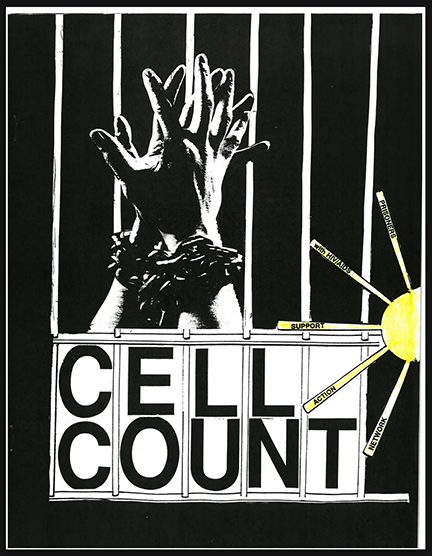
Hussain recalled her connection with one prisoner, Moka Dawkins, a Canadian trans woman who spent four years in a men’s prison. Dawkins wanted to write an article for Cell Count about the transphobia she was experiencing, but she was worried her submission would be intercepted on the way out. So she would call Hussain to dictate her article, in 20-minute increments over a period of several weeks.
Inside Scoop editor Anna Sigrithur said she also wrestles with this, but has learned a few creative workarounds to push back against institutional censorship.
One example she gave involved an article written by a group of remand prisoners in a JHSM literacy class. With help from an instructor, the prisoners had reviewed the Manitoba Auditor General’s recommendations for preparing people to exit custody, then developed their own recommendations based on lived experience.
Sigrithur said when reviewers pushed back against the “political” nature of the piece, she emphasized the importance of practicing critical thinking. She told reviewers that this was a public document directly affecting students’ lives, and the students had a right to meaningfully engage with its ideas.
That worked.
Still, it’s a common occurrence for issues to bounce back. Walby says one issue of the Journal of Prisoners on Prisons was returned by every institution in California because of its content on the Black Panther Party.
“Sometimes they’ll say something like, ‘This was designated as contraband…’ and then we’ll have to fight that and usually we’re able to overturn it,” Walby says.
People on the inside also take part in these fights. Hussain says some prisoners care about Cell Count so much that they advocate for it directly to the warden or other officials.
And sometimes publications get banned altogether. In 2016, both Cell Count and the Journal of Prisoners on Prisons were prohibited in all provincial institutions in B.C. According to a series of publicly released emails, the B.C. Ministry of Safety gave reasons including “negative content” and “anti-corrections messaging.”
One prisoner, whose name is redacted in the emails, enlisted Prisoners’ Legal Service (PLS) to advocate on his behalf. “It is our position that this decision is a violation of [redacted]’s rights,” a PLS advocate wrote in one of the emails. “These publications [are] the only way for him to positively voice his opinions… and to find news and stories that directly affect [him].”
The ban on the Journal of Prisoners on Prisons was lifted, according to the email thread, but Hussain says Cell Count is still prohibited in B.C.
FROM THE INSIDE OUT
But the voices of prisoners are still getting out, and that’s partly because many outlets publish online. So even if an issue doesn’t make it inside a facility, its content will still be accessible to the public.
Non-incarcerated readers include academics and researchers, social service workers, and prisoners’ friends and family. They also include people with no direct connection, who might simply be curious or stumble upon the work.
This year, The Inside Scoop made changes to better engage its non-incarcerated audience. The editorial team encouraged more first-person storytelling and added a few new sections to the paper. People have responded very positively, Sigrithur says.
Dream Canteen is one of the new sections, which invites writers to share items they wish they could buy in prison.
“[It’s] our strategic way for demonstrating to a non-prison audience just how limited and under-resourced and inaccessible things are to people in jail,” says Sigrithur. “I think it has really done some good.
“There’s definitely been lots and lots of comments from [non-incarcerated readers] … who have been like, ‘Wow, I didn’t realize about this.’”
The Inside Scoop and Cell Count are also widely read by people in social services, who may have justice-involved clients, but lack their own lived experience.
RJ Chevalier, Cell Count’s incoming editor, says they’re able to reach this audience through PASAN, the nonprofit that publishes the paper. They often meet staff at prison health fairs, Chevalier says, who then discover Cell Count while tabling inside a facility.
“Just this past month, I’ve had people coming back and asking, how can they receive it?” they said. “They want to share it with their colleagues at their workplace.”
This type of readership can help amplify prisoners’ work.
“Maybe we can’t push in certain ways…, because if we do, then we lose institutional access,” Sigrithur says.
But she says they can still publish writing exercises from their literacy classes in a more neutral way, which advocacy groups can use to push a little harder.
And of course, free journalists can read the work too. Munn says there’s much to be gained from journalists’ engagement with this writing.
For one thing, she says, it offers a window into the “mundane” — those stories of prisoners’ everyday lives that are otherwise impossible for journalists to tell fully. This was the idea behind an article Munn co-authored, in which she used archival material to show how people have experienced Christmas while incarcerated.
Munn says it’s also a way for journalists to stay informed about human rights concerns. And once journalists know those issues, they can lead deeper inquiries that spark public interest, she says.
MOVING THE WORK FORWARD
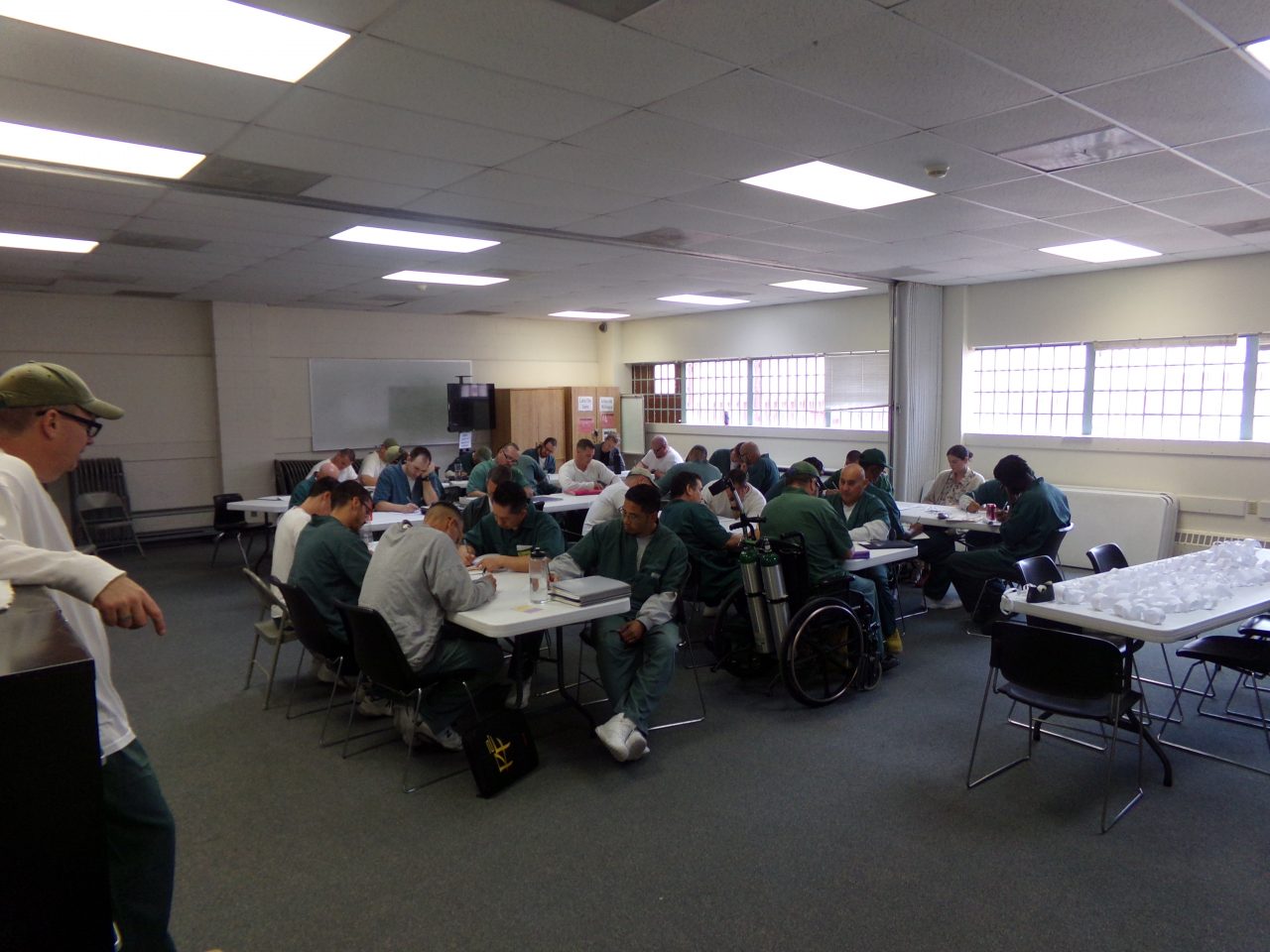
Phelan’s ideas for how free journalists can help included publishing the work of incarcerated writers, or even teaching journalism behind bars through initiatives like Prison Journalism Project.
She says her own journey since prison is both exhausting and satisfying to think about.
She re-entered the free world in December 2020, just a few months after her first article was published. Two years later, she was on a TEDx stage.
And in 2022, she was hired as managing editor of The Inside Report.
But her own time with the Department of Corrections wasn’t quite finished. In February 2023, she collaborated with the department to start her own prison program.
Today, Unbound Authors, the nonprofit Phelan co-founded, mentors more than 500 incarcerated writers. And in 2025, it was approved to start a state-wide newspaper, magazine and an anthology.
“It’s interesting to be a formerly incarcerated person now in a contract with the Department of Corrections,” Phelan says. “As [someone] who has served my time, do I love always having to be still guided by the policies and procedures of the [department]? Not always.”
But she says the most important thing is continuing her work with imprisoned writers.
“I found my passion and my soul’s purpose while I was incarcerated,” she says. “So will I jump through the hoops they put in front of me? Yeah, I will.
“Getting their stories out into the world is a hugely satisfying thing.”